OPEN DATA PRACTICES: BENEFITS TO SCIENCE FROM SLOW BUT CERTAIN ‘CULTURE CHANGE’

Anneke Zuiderwijk joined TU Delft in 2011 as a PhD student. During her doctorate studies she investigated which socio-technical infrastructure can enhance the coordination of open data use. In one of her case studies, Anneke analysed the data collected, stored and openly shared by the Dutch Ministry of Security and Justice. Now an Assistant Professor at TU Delft Faculty of Technology, Policy and Management, Anneke continues exploring the field of open data and describes her research as follows:
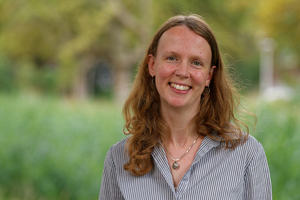
My research is focused on the development of theory for incentivizing open data sharing and use through infrastructural and institutional arrangement
Anneke Zuiderwijk
“My research is focused on the development of theory for incentivizing open data sharing and use through infrastructural and institutional arrangements. Infrastructural and institutional arrangements can vary in different research/societal areas and also for different stakeholders (i.e. researchers, government, industry and citizens). An example of an infrastructural and institutional arrangement for researchers in relation to the challenge of “lacking skills to use open research data” can be improving the ease of use of open data portals (infrastructural arrangement) in combination with mandatory researcher training for using such portals (institutional arrangement).”
When asked about her motivations for publishing her datasets, Anneke says:
“To be published in a scientific journal is a motivation. In high-quality papers it is necessary to share the data. I always add a note in my articles indicating that the data will be available. I think it gives more trust to reviewers. I think it is a plus point to get the articles published.”
Publishing the data that support her publications and research findings has become a common practice for her, and Anneke wants to make it the norm for her students too.
“Culture for open science changes very slowly. My own change towards open data took some time. The first time I published a dataset, it was because of the requirements from the European Commission who was funding the project I worked on. Then I thought, I still have a lot of data from my PhD work, so I decided to share it on 4TU.ResearchData. Now, I encourage my students to publish their data on the archive as well…if you publish a report or an article, publish your data!”
“I realize that the students also need guidance getting their workflows in place. They need to have in mind certain practices when they are planning their projects and the collection of the data. For example, what information and documentation they need to collect in order to make the data understandable for others. The first time I did this for my PhD data it took me a long time. If I would have known about what I needed and how to share my data even at the half-way of my thesis, it would have helped.”
In her recent publication, Anneke explored the motivations for researchers in the field of astrophysics for publishing and sharing data. She conducted nine interviews with researchers to collect information about their practices and challenges when publishing data.
“For this study I did interviews, which I can not share in order to protect the identity of the researchers. But, I can still share the methodology, procedures and standards used for analysing the data. I can also share the analysed data and the code book. All this data can be useful for somebody else, if not for my future self.”
Anneke has chosen 4TU.ResearchData as the platform to publish her datasets. When we asked her about the benefits of using this archive, she says:
“It is very intuitive how to use the archive, even when you use it for the first time. It allows you to provide metadata, which improves findability and re-usability of the data. And, you get support from the data curators. Somebody actually looks at what you submit and sends you suggestions on how to improve the quality of your dataset. For example, they suggested that I prepare a ReadMe file as part of the documentation of the dataset, which contains useful information for others that would like to use the data”
Link to the dataset on 4TU.ResearchData.
Cover image by vishnu vijayan via Pixabay