A testimonial to our data trainer


Ellen Verbakel has dedicated her career to providing educational support for the research community. The team at 4TU.ResearchData express their thanks and best wishes to Ellen as she begins her retirement.

Since joining TU Delft in 1985, Ellen Verbakel has worked as a librarian, a journal editor and, finally, as the 4TU.ResearchData ‘data trainer’.
In her varied roles, Ellen has dedicated great effort to raising awareness about research data management and FAIR data practice within the research community.
Working as a journal editor in the university publishing office, Ellen became well-connected with researchers. As she learned about their research, she grew to understand their needs, motivations and objections to publishing articles and data.
“I learned to walk in the shoes of the researcher,” says Ellen. “I realised that I had to understand why researchers were reluctant to share their research outputs before I could find solutions to overcome their objections.”
Devoting time for one-to-one engagement with researchers helps to demonstrate the many benefits of making research more open. “Eventually, researchers come to realise that publishing their research outputs raises their professional profile by increasing their impact, visibility, data reuse and citation rates.”
She adds, “What’s more, they have access to safe and secure repositories to access their publications and data for years to come. No more hard copies collecting dust!”
The Open Access Movement
Ellen explains that her personal correspondence with researchers helped to drive Open Access publishing, a movement initiated at TU Delft to make scientific knowledge openly accessible and free of charge to all.
“The policy on Open Access Publishing mandates that researchers publish their accepted peer-reviewed articles in the TU Delft Repository for research publications. Similarly, there is encouragement for students to deposit their reports and theses in the educational repository. And, in accordance with the TU Delft Research Data Framework Policy, from January 2019, all doctoral candidates must upload their data 4TU.ResearchData before their defence.”
The informed researcher
Ellen has successfully engaged researchers in order to drive a culture change toward Open Research within her institution through the coordination of training.
Ellen partnered with Information Specialist, Dirk Jan Ligtenbelt, to deliver the ‘Informed Researcher’, a TU Delft Graduate School course designed for 1st year PhD candidates. The two-week online course, that runs eight times per year and accommodates a maximum of 16 students, offers students an opportunity to master information and data skills so that they can locate, evaluate, select, collect, organise information to conduct their research effectively and efficiently from the beginning of their project.
“Essentially, this is a ‘crash course’ where students learn how to investigate and reference literature, manage data, and publish articles,” says Ellen.
“The syllabus introduces useful tools and services to help students organise their work efficiently, and includes 4TU.ResearchData as the recommended repository for the long-term preservation of data and code as part of their data management plan.”
Training for data supporters
Ellen believes in the provision of training for RDM support staff to ensure that researchers are adequately supported in their work.
“A dual approach must be taken to provide training for researchers and RDM support staff simultaneously. Training helps to build and maintain a connection among support staff, and helps to relieve the burden of researchers.”
Ellen was a coach for ‘Essentials 4 Data Support’, a course developed by the RDNL alliance that comprises 4TU.ResearchData, DANS and SURFsara. The course is designed for RDM support staff, such as librarians, IT and information specialists, data stewards and research office staff, and provides basic knowledge and skills required to help them take the first steps to supporting researchers throughout all stages of the research data lifecycle.
“Participants develop soft skills that are essential for engaging researchers and make valuable connections to develop their own support network,” says Ellen. “After all, when data support staff communicate and collaborate, everyone in the research community benefits.”
‘Essentials 4 Data Support’ is delivered three times per year and has trained more than 300 participants to date. The upcoming course runs from 11th March to 22nd April 2021 and is open for registration!
Going global with a MOOC
Ellen has worked with a dynamic team of RDM experts from The University of Edinburgh, Digital Curation Centre (DCC) and RDNL to design ‘Delivering Research Data Management Services’, a Massive Open Online Course (MOOC) that has educated more than 3,000 data supporters from across the globe since it was first delivered in 2019.

Top (left to right):
Shanmugasundaram Venkataraman (DCC), Alexandra Delipalta (DCC), Sarah Jones (GÉANT).
Bottom (left to right):
René van Horik (DANS), Ellen Verbakel (4TU.ResearchData), Ryan O’Connor (DCC).
The six-week-syllabus covers fundamentals of RDM practice, including modules on repository certification, metadata documentation, creating data management plans, data sharing, and legal issues.
As part of the course, participants also undertake a gap analysis to evaluate their institution’s ability to deliver research data services, and develop their own RDM roadmap to facilitate their delivery (Register to be notified when to enrol for the upcoming MOOC).
Witnessing RDM supporters unite online to participate in the MOOC has filled Ellen with an overwhelming sense of pride and accomplishment.
“It’s great to see professionals of all career stages come together to learn and build their network beyond their own research institution.”
She continues, “It’s truly rewarding to receive positive feedback from participants, especially those in least developed countries who express immense gratitude for the opportunity to participate in the MOOC and benefit from the community spirit.”
Ellen leaves us with a final reflection.
“The proudest moments of my career have been to watch beginners, who are often insecure and have limited knowledge, blossom with confidence and enthusiasm during their RDM training. I’m pleased to retire knowing that I have contributed to their personal and professional growth, and that they will continue to make a difference within their research communities.”
- E. Verbakel (The ‘Data Trainer’)
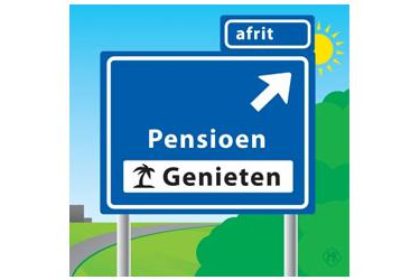
Ellen plans to spend her retirement socialising with friends and family, visiting her holiday home in Italy and long-distance hiking.
Thank you, Ellen, for your service, commitment and community spirit over the past 35 years.
Written by Connie Clare (4TU.ResearchData)
Cover image illustrated by Connie Clare (4TU.ResearchData)