


Natalia Romero Herrera is an Assistant Professor at the Faculty of Industrial Design at Delft University of Technology. She does research on human computer interaction and she studies how technologies can help and encourage people to have a more active role in changing their own behaviour. For her current research, which focuses on tracking and contextualizing the behaviour of obesity patients, Natalia applied for the Data Refinement Fund, offered by 4TU.ReseachData. This grant enables her team to take the research a step further. The publication of the dataset in the 4TU.ResearchData archive ensures that other researchers can also make use of her work, which further stimulates the impact of Natalia’s research.


With her project, called ‘Mixed Methods for monitoring food intake — towards a new generation of ehealth prevention apps’, Natalia wants to learn more about the underlying mechanisms that cause patients with obesity to make dietary decisions. Natalia’s ultimate goal is to create technological tools that can provide dietitians and their clients with more holistic feedback on food intake.
Natalia Romero Herrera (Photo: Jan van der Heul)
Natalia structures her observations in three categories: social, personal and situational contexts. Relevant factors within these contexts, that could explain a person’s behaviour, could be a person’s values, beliefs, genetics, economic status, habits or external temptations. To monitor this, Natalia uses sensors, electronic surveying technologies and interviews, so that she can activate people to capture as much of these contexts as possible. Her participants provide positive insights as they engage in these activities, since many of them are eager to get to know the deeper reasons behind their eating behaviour.
The extent to which the different factors are relevant, depends on the characteristics of the humans involved, making the research a very personal and intriguing encounter for the participants. By redesigning current dietitians’ tools that capture food intake, Natalia really wants to go beyond the possible feelings of shame and discomfort that obese clients experience when using these tools, ultimately hoping to capture the true feelings and habits of her participants. This way, the activity of food intake reporting really becomes part of the participant’s life and it helps them to get adequate and customized help for their problems.
Natalia is very happy that she got the opportunity to apply for the Data Refinement Fund:
“I really believe that without the funds, we would not be able to create a project of the size and the impact that it has now. We create various types of data and especially in this project the data itself is quite personal and sensitive. The funds enable my team to interpret every piece of the data with utmost care, without having to think too much about financial constraints. My talented student assistants, who are financed by the funds, help with the execution of the coding schemes, all needed to further standardize the data. Furthermore, they carefully anonymize the data, to protect the privacy of the participants while at the same time ensuring that the data remains useful for other researchers. All these practices make the research data even richer!”
Openly publishing a dataset is not very common in the field of human centred technology design. For Natalia, however, publishing has many advantages and it really opened up a new world of opportunities for her. She explains:
“The data in itself is not easy to collect, so if people want to build further on my research, I am very happy to support them. Also, I believe that my data can be seen through many different lenses, leading to different outcomes. Even linguists or policy-makers could use my work.”
The dataset itself is not the only thing Natalia publishes. She also attaches her codebooks, interpretations and way-of-thought.
“I publish almost everything, as I really want to be as transparent as possible. Other researchers are free to use my data as they want, I will not prescribe a predefined way of looking at it. I am very curious to learn more about the impact that my published data will have.”
On a personal level, publishing the dataset actually encouraged Natalia to work even more rigorously than she already did.
“I think that publishing the data makes you even more conscious about the solidity of your workflow. Openly sharing my work has definitely increased the quality and rigour of the dataset, so to me it is a real win-win situation!”
Link to the dataset referred in this post on 4TU.ResearchData
Author: Daen Smits, Trainee Research Data Officer, 4TU.Centre for Research Data | TU Delft Library
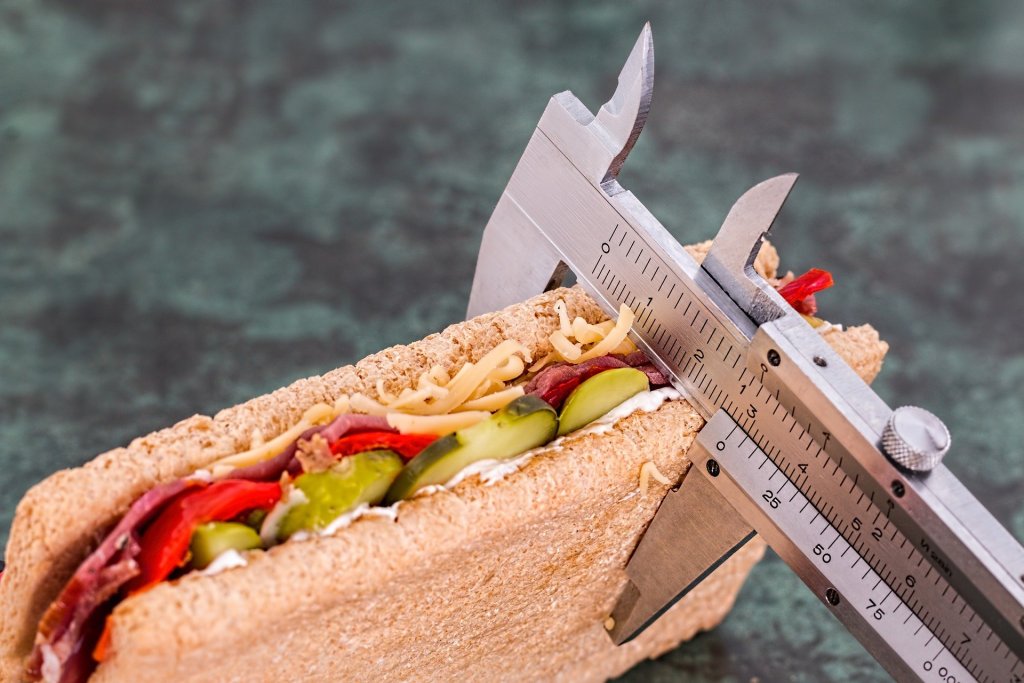
Cover image by Steve Buissinne via Pixabay